
THE FACTORY IGNITES WITH SOUND
A Tribute to LUIGI NONO
March 15, 2026 | h 18:00

Concert
Ticket price: €15
Giulia Peri voice
Roberto Fabbriciani flutes
Michele Greco sound engineer
Program
Luigi Nono | La Fabbrica Illuminata (1964)
for soprano and 4 tracks-tape
lyrics by Giuliano Scabia and Cesare Pavese
Luigi Nono | Das atmende Klarsein, fragment (1981)
for bass flute, tape and live electronics
The program brings together two emblematic works by Luigi Nono, a central figure in 20th-century music and political thought.
La Fabbrica Illuminata (1964), set to texts by Giuliano Scabia and Cesare Pavese, combines the soprano voice with recorded sounds of workers from the Italsider steel factory in Genoa, shaping a powerful work of civic poetry charged with emotional intensity.
Das atmende Klarsein (1981), a fragment for bass flute, magnetic tape, and live electronics, belongs to Nono’s late, visionary period: a rarefied exploration of breath, fragility, and inward listening. Together, these two works trace the artistic journey of a composer who conceived music as an act of conscience and freedom.
Roberto Fabbriciani flutes
Michele Greco sound engineer
Program
Luigi Nono | La Fabbrica Illuminata (1964)
for soprano and 4 tracks-tape
lyrics by Giuliano Scabia and Cesare Pavese
Luigi Nono | Das atmende Klarsein, fragment (1981)
for bass flute, tape and live electronics
The program brings together two emblematic works by Luigi Nono, a central figure in 20th-century music and political thought.
La Fabbrica Illuminata (1964), set to texts by Giuliano Scabia and Cesare Pavese, combines the soprano voice with recorded sounds of workers from the Italsider steel factory in Genoa, shaping a powerful work of civic poetry charged with emotional intensity.
Das atmende Klarsein (1981), a fragment for bass flute, magnetic tape, and live electronics, belongs to Nono’s late, visionary period: a rarefied exploration of breath, fragility, and inward listening. Together, these two works trace the artistic journey of a composer who conceived music as an act of conscience and freedom.
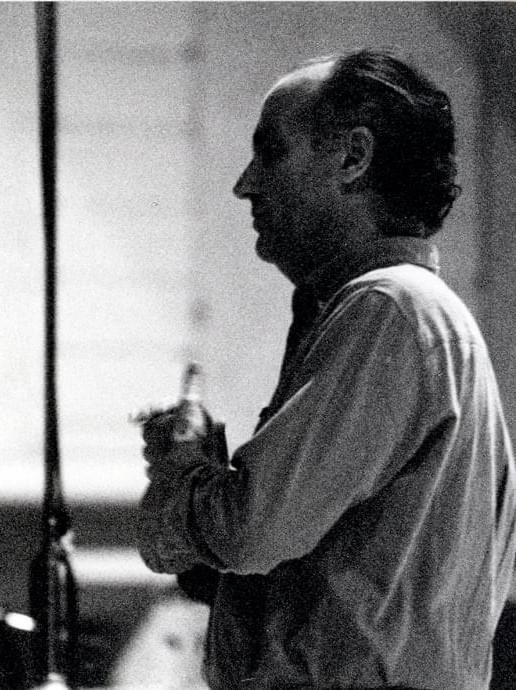
Luigi Nono
Luigi Nono (1924–1990) was an Italian composer and one of the leading figures of 20th-century avant-garde music.
Born in Venice, he studied there and in Darmstadt, where he came into contact with key figures of contemporary music such as Bruno Maderna and Karlheinz Stockhausen.
Deeply committed on a political and civic level, Nono conceived music as a tool for critical reflection and protest, combining sonic experimentation, electronic music, and themes related to freedom, memory, and social justice. Among his most important works are Il canto sospeso, Intolleranza 1960, and Prometeo: Tragedy of Listening.
Born in Venice, he studied there and in Darmstadt, where he came into contact with key figures of contemporary music such as Bruno Maderna and Karlheinz Stockhausen.
Deeply committed on a political and civic level, Nono conceived music as a tool for critical reflection and protest, combining sonic experimentation, electronic music, and themes related to freedom, memory, and social justice. Among his most important works are Il canto sospeso, Intolleranza 1960, and Prometeo: Tragedy of Listening.