Overview
Polytropon Arts Center is housed in a repurposed industrial complex near the historic Medici Bridge (1555), along the scenic Sieve River in San Francesco (Pelago), within the Metropolitan City of Florence, Tuscany.
Founded by Maria Papadaki Badanjak, Polytropon serves as a cultural center dedicated to fostering artistic creativity and intercultural exchange. It features two versatile spaces designed for exhibitions, workshops, performances, concerts, and a wide range of cultural events — supporting both local and international artists.
Our mission is to develop a sustainable, non-profit art hub that embraces multidisciplinary practices, nurturing creativity, artistic experimentation, and community engagement.
Founded by Maria Papadaki Badanjak, Polytropon serves as a cultural center dedicated to fostering artistic creativity and intercultural exchange. It features two versatile spaces designed for exhibitions, workshops, performances, concerts, and a wide range of cultural events — supporting both local and international artists.
Our mission is to develop a sustainable, non-profit art hub that embraces multidisciplinary practices, nurturing creativity, artistic experimentation, and community engagement.
History
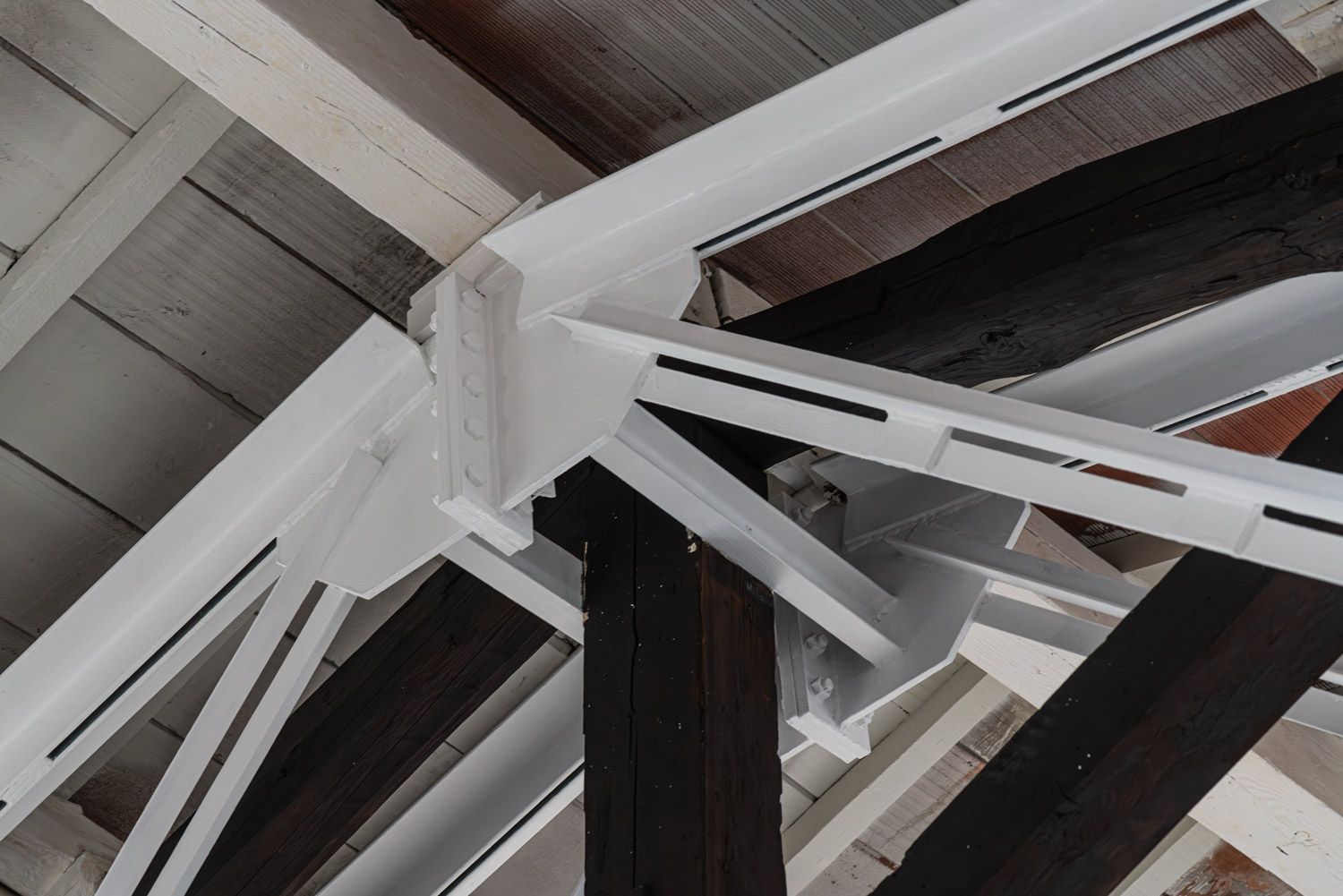
Over the centuries, the industrial complex on Via del Molino in San Francesco (Pelago) has undergone continuous evolution, reflecting the transformations of hydraulic architecture in the area. Originally comprising a mill and a fulling mill, the site was later converted into a spinning mill. With few interruptions, production continued for more than six centuries, until the late 1960s.
In the industrial context of the 19th century, the former fulling mill housed the “Manifattura di Pontassieve Fratelli Bonini”, a factory dedicated to the production of carpets, as well as spinning and weaving jute waste and other fibres. The plant employed about thirty workers, mostly women. It produced high-quality carpets using seven hand-knotted wool looms, while eight mechanical looms were used for jute and cotton carpets. The factory was powered by the River Sieve, whose energy was harnessed through waterwheels.
During the Second World War, the area suffered heavy bombing, including the partial destruction of the Medici Bridge by Allied forces, who mined one of its arches to sever the connection between San Francesco, Pontassieve, and Florence.
In the post-war period, the factory’s image was gradually restored: reconstruction efforts focused on repairing the damaged sections and giving the façade a unified and dignified appearance, consistent with the principles of heritage preservation.
In the industrial context of the 19th century, the former fulling mill housed the “Manifattura di Pontassieve Fratelli Bonini”, a factory dedicated to the production of carpets, as well as spinning and weaving jute waste and other fibres. The plant employed about thirty workers, mostly women. It produced high-quality carpets using seven hand-knotted wool looms, while eight mechanical looms were used for jute and cotton carpets. The factory was powered by the River Sieve, whose energy was harnessed through waterwheels.
During the Second World War, the area suffered heavy bombing, including the partial destruction of the Medici Bridge by Allied forces, who mined one of its arches to sever the connection between San Francesco, Pontassieve, and Florence.
In the post-war period, the factory’s image was gradually restored: reconstruction efforts focused on repairing the damaged sections and giving the façade a unified and dignified appearance, consistent with the principles of heritage preservation.

Vision &
Values
Polytropon Arts Center seeks to cultivate a cross-disciplinary and dynamic environment that nurtures diverse artistic practices and fosters engagement with different communities. Polytropon aspires to become a place where art contributes to a more connected, accessible, sustainable, and inclusive society — a bridge between local culture and global creativity.
Artistic Innovation & Experimentation
Polytropon encourages interdisciplinary practice, providing artists with opportunities to explore new forms of creative expression and contribute to an ever-evolving cultural landscape.
Inclusivity, Accessibility & Diversity
Polytropon is committed to maintaining an open and welcoming space for individuals of all backgrounds, experiences, and abilities. By removing barriers to participation and offering free or affordable access, the center ensures that the arts remain accessible to everyone.
Collaboration & Engagement
Through meaningful partnerships and collaborative initiatives, Polytropon seeks to inspire creativity that bridges socio-cultural divides and sparks fresh ideas.
Art as a Catalyst for Social Change
Polytropon believes in the transformative power of art to engage with contemporary issues, stimulate dialogue, and foster positive social change.
Artistic Innovation & Experimentation
Polytropon encourages interdisciplinary practice, providing artists with opportunities to explore new forms of creative expression and contribute to an ever-evolving cultural landscape.
Inclusivity, Accessibility & Diversity
Polytropon is committed to maintaining an open and welcoming space for individuals of all backgrounds, experiences, and abilities. By removing barriers to participation and offering free or affordable access, the center ensures that the arts remain accessible to everyone.
Collaboration & Engagement
Through meaningful partnerships and collaborative initiatives, Polytropon seeks to inspire creativity that bridges socio-cultural divides and sparks fresh ideas.
Art as a Catalyst for Social Change
Polytropon believes in the transformative power of art to engage with contemporary issues, stimulate dialogue, and foster positive social change.